CERT-FR: Record-Breaking Data Breach Violations — 16 Critical Alerts on May 18
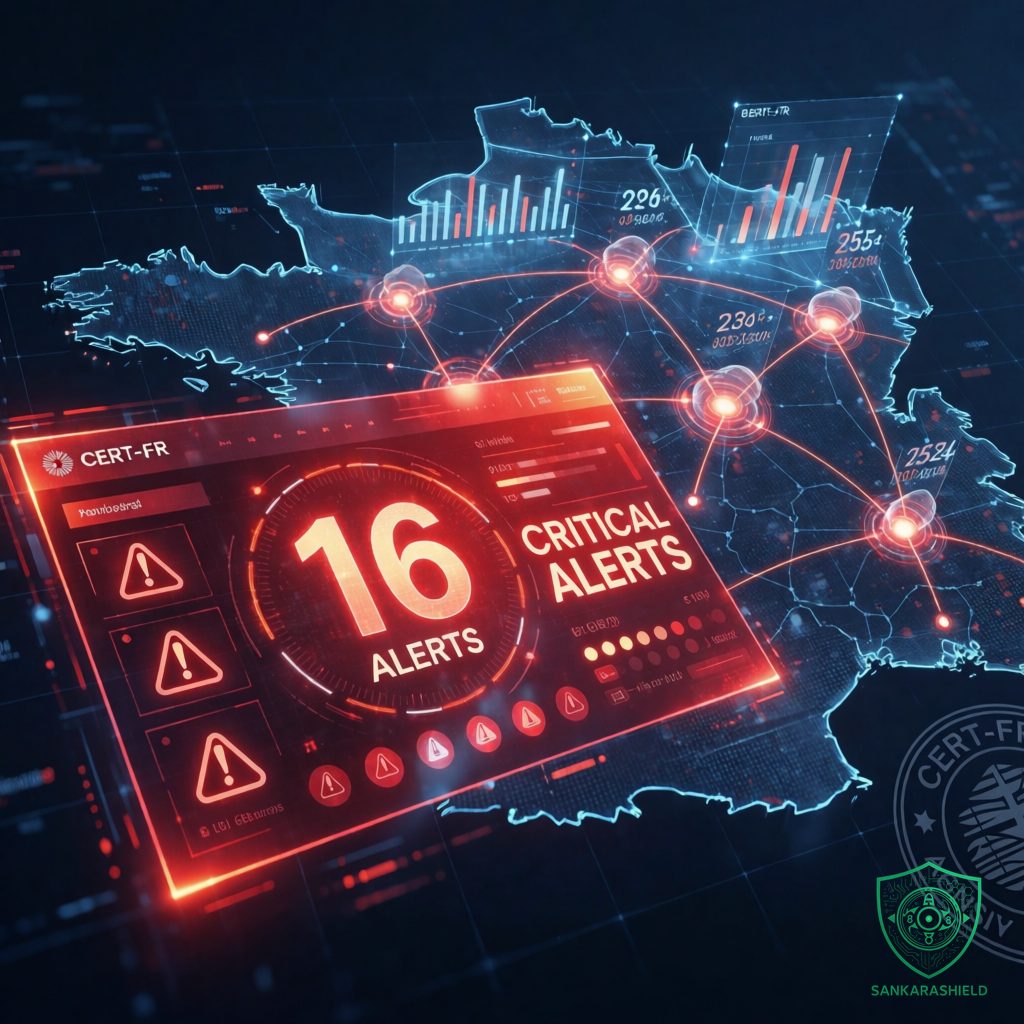
On May 18, CERT-FR issued 16 critical security alerts in a single day — a remarkable and unprecedented concentration of simultaneous threat activity. Official data confirms a record high in data breach violations across French public and private sector organizations.
This is not noise. This is signal.
The Numbers Behind the Headline
The 16 simultaneous advisories reflect a convergence of accelerating threats
Ransomware intensifying against critical national infrastructure Supply chain attacks compromising trusted software vendors and update mechanisms Advanced credential theft through AI-enhanced phishing campaigns Rapid exploitation of newly disclosed enterprise vulnerabilities
One record-setting day does not happen in isolation — it reflects months of mounting pressure on attack surfaces left inadequately defended.
What This Actually Means
When a national CERT issues 16 critical advisories in a single day, three things are true:
1. Threat actors now operate at a speed and scale that has outpaced most defensive postures 2. Multiple campaigns run concurrently — your organization faces simultaneous risk vectors 3. The vulnerability-to-exploitation window is now measured in hours, not weeks
The record in data breach violations reflects thousands of individuals and entities whose sensitive data is now circulating on dark web markets, powering identity fraud operations, or being held for ransom.
What to Prioritize Right Now
CERT-FR advisories are actionable intelligence. Act on them today
Patch immediately — cross-reference CERT-FR CVEs against your full asset inventory Audit third-party access — your vendors and partners are part of your attack perimeter Test your incident response — before the breach, not after Train your people — social engineering remains the dominant initial access vector
The Broader Context
The pace at which national CERTs publish high-severity advisories has fundamentally changed — this is no longer about periodic digests, but real-time intelligence demanding immediate operational decisions.
The organizations that will navigate this share three traits: real attack surface visibility, rehearsed incident response, and security treated as a boardroom priority — not IT overhead.
The record is broken. What are you doing about it?
How is your organization responding to the increasing volume and urgency of CERT advisories? Are you seeing faster exploitation timelines in your own environments?
Share your perspective in the comments.