NetDevOps is not the future. It's the standard your network team hasn't adopted yet.
For decades, network engineering relied on manual CLI commands, undocumented changes, and "if it works, don't touch it" culture. That era is over.
NetDevOps — the convergence of networking and DevOps practices — is reshaping how infrastructure teams operate. The tools are mature, battle-tested, and production-ready.
Here's the core stack.
Ansible — The Entry Point
The most accessible automation layer for network teams. Agentless, YAML-based, and capable of managing Cisco IOS, Juniper JunOS, Arista EOS, and more through a single unified interface.
But Ansible alone isn't enough. It automates execution. It doesn't enforce state.
GitOps — The Missing Layer
GitOps brings version control to your network. Every VLAN, BGP policy, ACL, and interface config lives in a Git repository. Changes go through pull requests and CI/CD pipelines — exactly like application code.
Full auditability. Rollback capability. A single source of truth. No more "who changed that route map Friday night?"
NAPALM — Vendor Abstraction Done Right
NAPALM (Network Automation and Programmability Abstraction Layer with Multivendor support) solves vendor heterogeneity head-on.
One Python API. Multiple vendors. Consistent behavior.
Retrieve BGP neighbors, push configs, diff changes, and roll back — across Juniper, Arista, and Cisco — using the same interface.
Batfish — Validate Before You Deploy
This is where things get genuinely powerful.
Batfish is an open-source network configuration analysis tool. It models your entire network from device configs and lets you query it with Python — before a single packet changes.
Before any deployment: Will this ACL block production traffic? Does this BGP policy create a routing loop? Which devices lose reachability after this change?
Batfish catches intent violations before they reach production. It's your pre-flight check for network changes.
The Full Pipeline
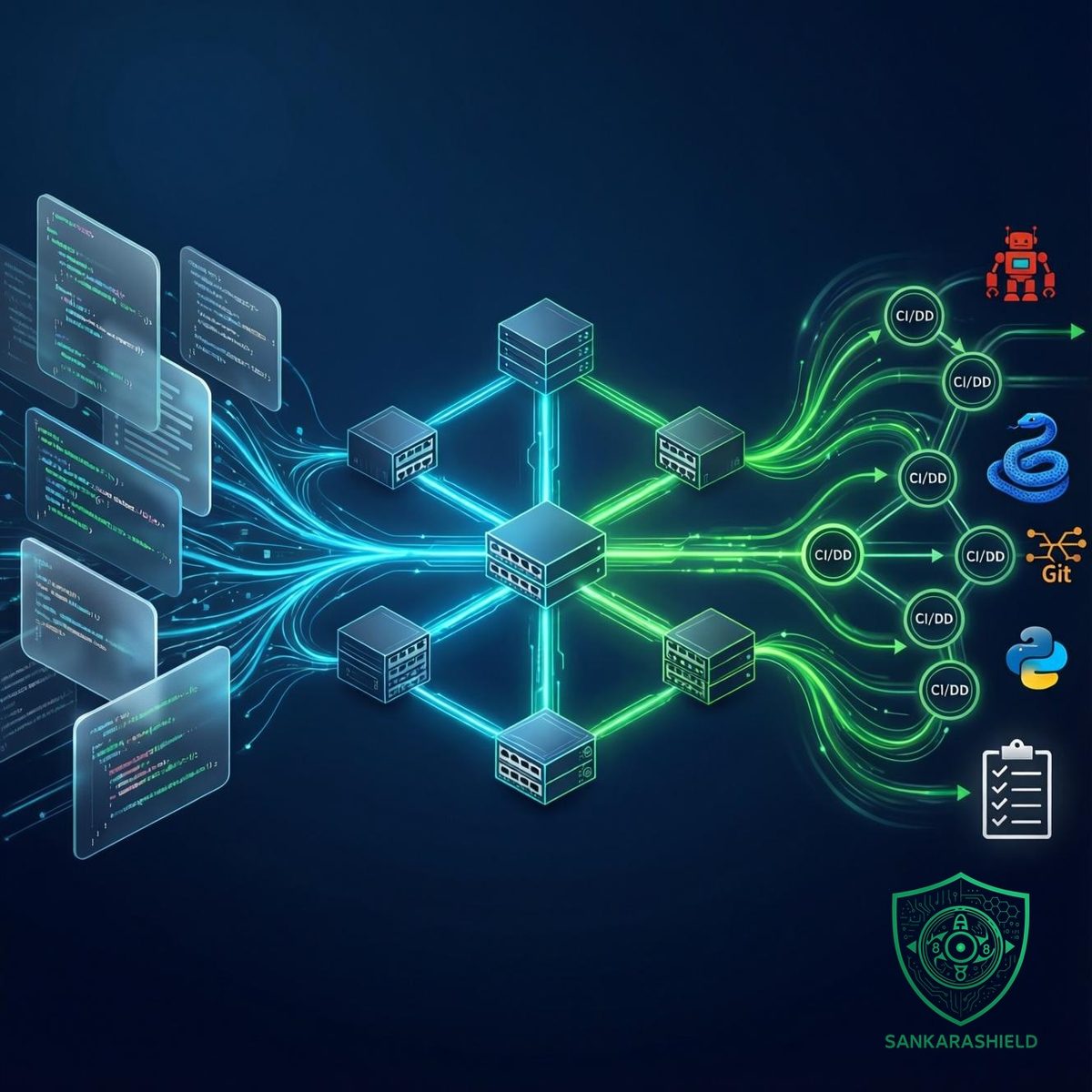
Config in YAML committed to Git validated by Batfish deployed via Ansible/NAPALM drift detected and corrected automatically.
This is Network as Code. Not a buzzword — a reproducible, auditable, testable operational model.
The real impact
Change lead time drops from days to hours Configuration drift becomes detectable and correctable Junior engineers contribute safely through reviewed PRs Undocumented manual changes stop causing outages
The network is no longer exempt from engineering discipline.
If your team is still SSHing into boxes without a paper trail, the question isn't whether to adopt NetDevOps — it's how far behind you already are.
What's your current automation stack? Drop it in the comments.