SASE Adoption in 2026: Converging Networking and Security at Scale
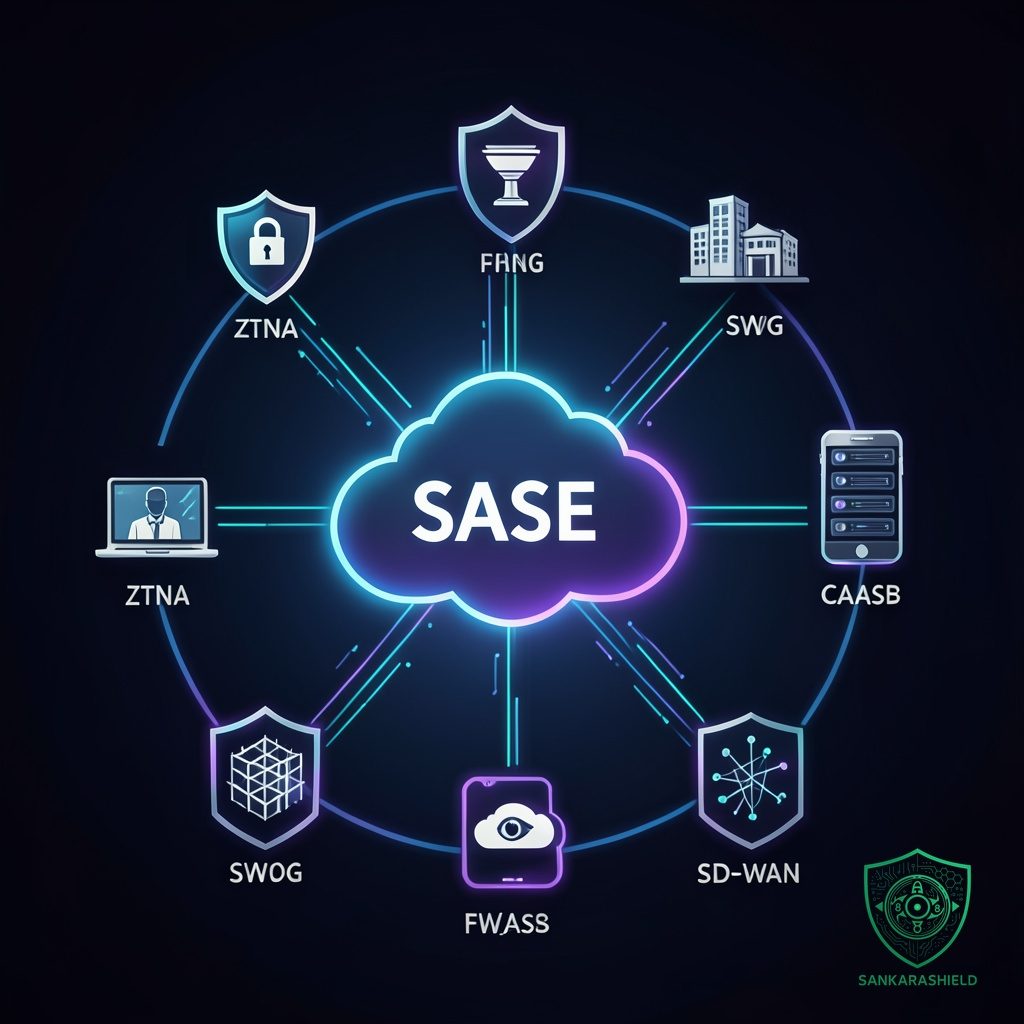
SASE is no longer a buzzword. It is the dominant architecture for hybrid organizations. But most deployments still fail for the same reason.
Organizations buy SASE products before defining an architecture. No identity strategy. No phased roadmap. Legacy assumptions preserved. The result: expensive tools with incomplete coverage and exploitable gaps.
What SASE actually is
- SASE DEFINITION Secure Access Service Edge converges network connectivity and security into a single cloud-delivered framework. Identity-centric, context-aware, enforced at the cloud edge. Coined by Gartner in 2019. Now a mainstream standard.
- SSE VS SASE Security Service Edge is the security-only subset. Excludes SD-WAN. Most organizations start here. Full SASE requires integrating both security and networking under a unified policy framework.
The five core components
- ZERO TRUST NETWORK ACCESS Replaces legacy VPN. Application-level access only. No implicit trust. Continuous verification at every session.
- SECURE WEB GATEWAY Inspects all outbound web traffic. Enforces policies. Detects malware and exfiltration. Cloud-delivered and scalable.
- CLOUD ACCESS SECURITY BROKER Visibility into SaaS usage. Enforces data loss prevention. Controls shadow IT and API risks.
- FIREWALL AS A SERVICE Next-gen firewall from the cloud. Eliminates hardware sprawl. Consistent policy across all users.
- SD-WAN Intelligent traffic routing. Manages hybrid connectivity. The networking foundation of SASE.
Common deployment mistakes
- BUYING BEFORE DESIGNING Tools purchased without a blueprint. Identity undefined. Legacy assumptions maintained. High cost, low value.
- IGNORING IDENTITY FOUNDATIONS SASE without strong identity is incomplete. MFA, SSO, and device trust are prerequisites. Identity is the new perimeter.
- NEGLECTING USER EXPERIENCE Controls degrading performance. Workers bypassing enforcement. ZTNA failing without proper end-user testing.
Measurable business outcomes
- COST REDUCTION Hardware cycles eliminated. Complexity reduced. Vendor contracts consolidated. Costs more predictable.
- SECURITY IMPROVEMENT Consistent enforcement anywhere. Reduced attack surface. Full traffic visibility. Compliance streamlined.
- WORKFORCE ENABLEMENT Seamless access from any device. Onboarding faster. Security invisible when done right.
Where to start
Audit your architecture. Map visibility gaps. Deploy ZTNA first. Layer SWG and CASB progressively. Build toward convergence over a realistic roadmap.
SASE is a journey, not a procurement event. Success requires executive sponsorship, architectural clarity, and disciplined phased execution.
The question is not whether to adopt SASE. It is how quickly your organization can get there.
Where is your organization on the SASE journey?