SD-WAN was supposed to modernize your network. For many organizations, it quietly expanded the attack surface instead.
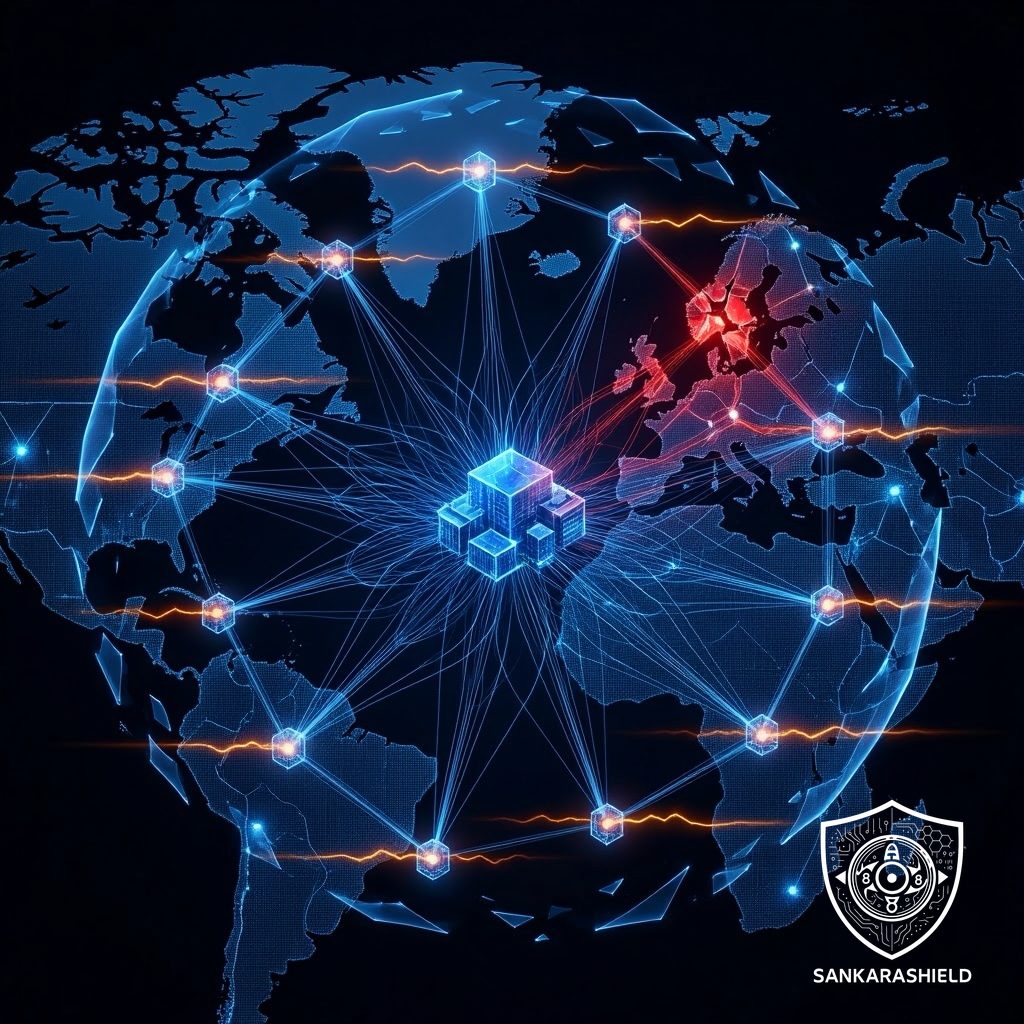
67% of enterprises that deployed SD-WAN created direct internet breakouts at branch sites without rebuilding security controls first.
The perimeter did not disappear. It fragmented — and became invisible.
What SD-WAN changed: Traditional MPLS routed all traffic through a central hub for inspection. SD-WAN pushes intelligence to the edge, enabling local internet breakouts at every site. Faster. Cheaper. More flexible. But every branch is now its own exposure point.
Where attackers found the gaps
- EXPOSED MANAGEMENT INTERFACES SD-WAN orchestrators are frequently reachable on the public internet. Default credentials and unpatched firmware turn vendor portals into entry points. CVEs in 2024 and 2025 allowed unauthenticated remote code execution — no phishing required.
- FRAGMENTED VISIBILITY Security teams lost sight of east-west and branch-to-cloud flows. Lateral movement became undetectable. Attackers dwell for months because no one watches local traffic.
- IMPLICIT TRUST BETWEEN SITES SD-WAN overlays create full mesh connectivity. Compromise one regional office and you have a trusted path to the datacenter and cloud. The feature that makes SD-WAN elegant makes containment extremely difficult.
- SECURITY AS AN AFTERTHOUGHT Most deployments were driven by network teams optimizing for cost. Security was retrofitted later — or not at all. Policies were never updated to reflect the new topology.
Real consequences: In late 2025, a ransomware group compromised a manufacturer by exploiting an unpatched SD-WAN controller. Initial access took four minutes. They traversed the fabric to the OT network. Fourteen facilities halted. The deployment was eighteen months old. No review had been conducted.
How to close the gaps
HARDEN THE CONTROL PLANE — Orchestrators must never be internet-accessible without a zero-trust gateway. Enforce MFA on every management interface. Patch aggressively.
RESTORE TRAFFIC VISIBILITY — Deploy cloud-delivered inspection at every breakout. SASE and SSE exist for this topology. Centralize telemetry so east-west flows are anomaly-detectable.
SEGMENT THE FABRIC — Branch-to-branch trust must be explicit, not implicit. Microsegment by site function and apply least-privilege routing.
AUDIT POST-MIGRATION — Every SD-WAN deployment should trigger a security architecture review. Network transformation and security transformation are not the same project.
SD-WAN did not create a security problem. It inherited existing debt — and made it faster, more distributed, and harder to contain.
Did your SD-WAN deployment include a security architecture review? Do you have full visibility into east-west traffic across your sites?