Shadow AI: Your Employees Are Using ChatGPT With Your Client Data Right Now 73% of employees use AI tools not
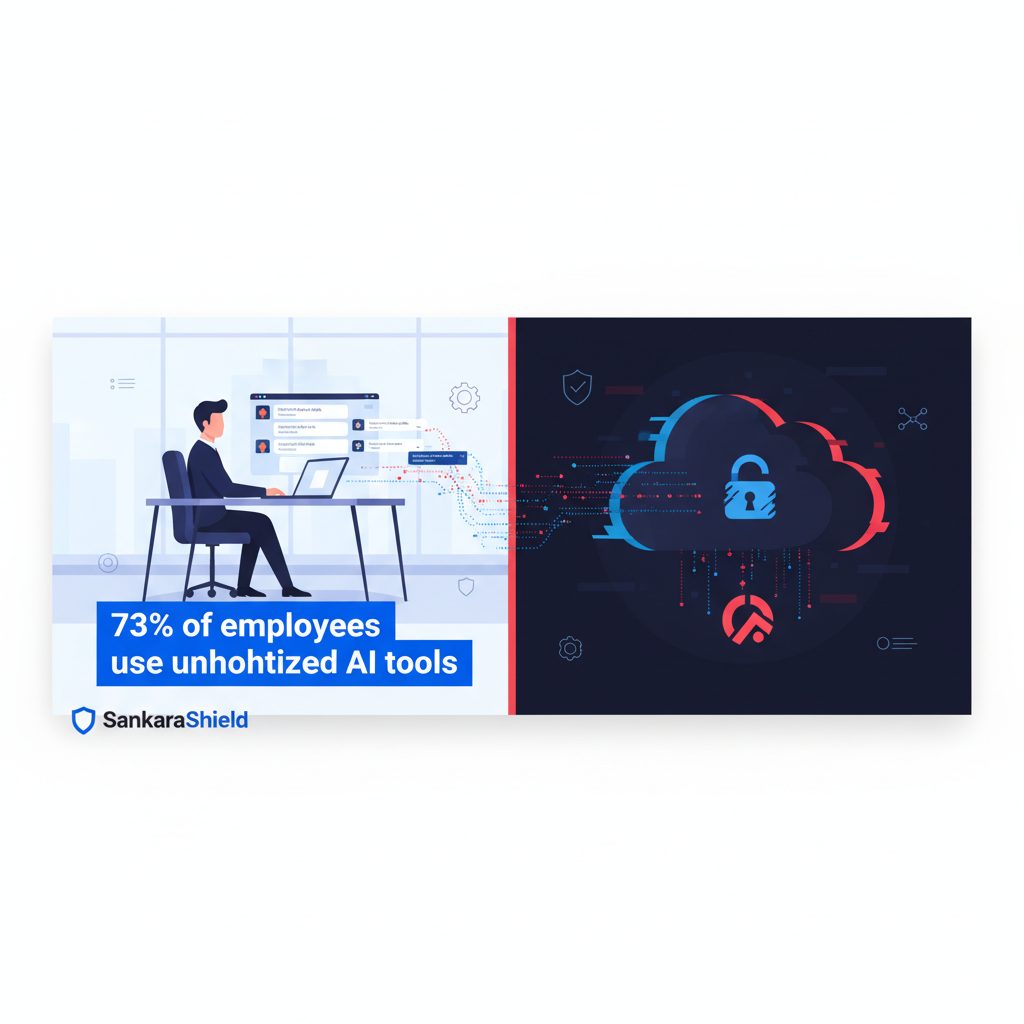
approved by their IT department.
Most of them see no problem with this.
This is Shadow AI, and it is the fastest-growing data leakage vector in enterprise security today.
The pattern is always the same. A developer pastes proprietary source code into an AI assistant. A lawyer uploads a confidential contract. A consultant feeds client financial data into a chatbot. All without any awareness that this data may be stored on third-party servers, used to train future models, or exposed through API vulnerabilities.
Shadow AI is not a future threat. It is happening now.
Why employees do it: AI tools offer real productivity gains. Management rewards the results without questioning the methods. Blocking these tools is perceived as blocking innovation. Security friction drives behavior underground.
The real risks
DATA EXFILTRATION — Sensitive data entered into third-party AI platforms leaves organizational control immediately. Terms of service for consumer AI tools often permit broad data usage.
REGULATORY EXPOSURE — GDPR and sector-specific regulations do not recognize unauthorized tool usage as a valid defense. A single incident can trigger breach notification obligations and significant fines.
INTELLECTUAL PROPERTY LOSS — Source code, product designs, and proprietary methodologies entered into public AI tools can become part of training data. Competitive advantage built over years can be compromised in one session.
PROMPT INJECTION — Malicious content embedded in documents fed to AI tools can manipulate outputs or extract previously provided context. This attack vector is new and almost never monitored.
The response cannot be prohibition alone.
Blocking AI without providing alternatives drives behavior to personal devices and unmonitored channels. The productivity imperative is real.
Effective governance requires: - Continuous discovery of AI tools in use across the organization - Clear policy on approved tools and prohibited data types - Enterprise-grade AI solutions with appropriate data agreements - DLP controls specific to AI submission - Employee education focused on real AI-specific scenarios
The window for proactive action is closing. Organizations that establish governance frameworks now will be prepared. Those that wait for the first incident will be reacting under pressure.
Does your organization have a Shadow AI policy? Have you audited which AI tools your employees are currently using?