The Network Without Humans: Agentic AI Takes Over Tier 1/Tier 2 NOC
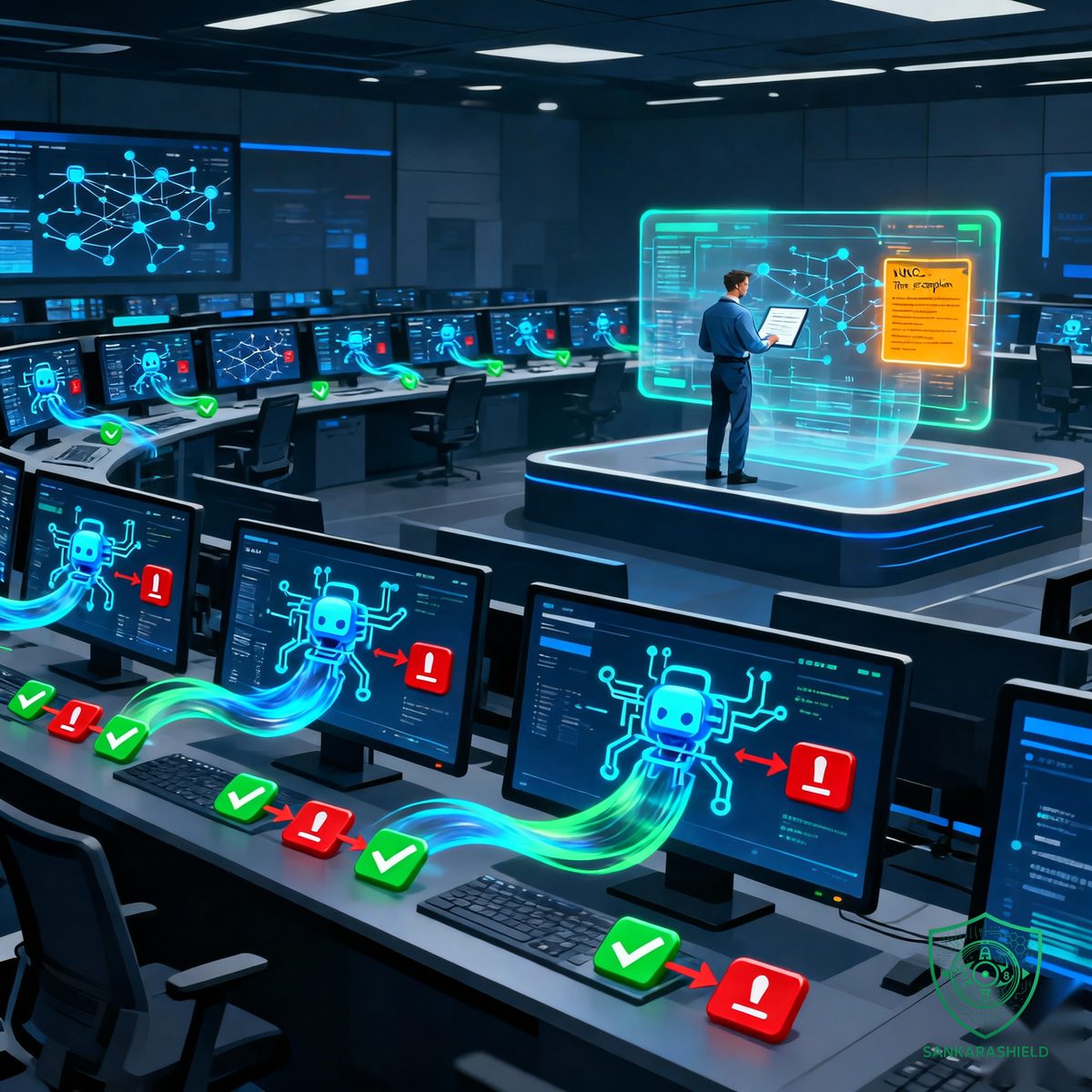
By the time most tickets reach a human in 2026, the fix will already be deployed.
That is the direction Tier 1 and Tier 2 network operations are heading. Not "AI-assisted." Not "AI-augmented." No human in the loop by default — humans only on exception.
WHAT "NO HUMAN IN THE LOOP" MEANS
Agentic AI does not just alert anymore. It correlates telemetry, diagnoses root cause, executes remediation, and files the change record — end to end, without a ticket ever landing in a queue.
Tier 1 goes fully agentic: alert triage, interface flaps, BGP session resets, capacity responses. Tier 2 follows close behind: cross-device correlation, config drift detection, low-risk change execution against pre-approved playbooks.
The agent does not wait for a human to read a runbook. It is the runbook, executing itself.
WHERE HUMANS STILL SIT
High-blast-radius changes. Novel failure modes the agent has no pattern for. Anything touching security posture, compliance boundaries, or customer-facing SLAs above a risk threshold. Multi-domain outages spanning network, compute, and application layers at once.
Humans stop being first responders. They become risk gatekeepers for the cases the model correctly refuses to touch alone.
SKILLS THAT BECOME CRITICAL
READING AGENT DECISIONS — auditing reasoning chains, spotting bad root-cause inference, catching drift before it becomes an outage.
GUARDRAIL DESIGN — defining blast radius, rollback conditions, and approval thresholds. Now core network engineering work, not a platform team side project.
SYSTEMS-LEVEL THINKING — agents handle single-domain patterns well. Cross-domain judgment and "should we" versus "can we" still need a human who sees the whole stack.
INCIDENT FORENSICS — when an agent makes a bad call at 3 AM, someone reconstructs why, fast, without full visibility into its reasoning.
SKILLS THAT STOP MATTERING
Manual CLI troubleshooting speed. Ticket queue triage. Memorized runbook execution. If the job is "follow documented steps faster than the next engineer," an agent already does it faster, at 3 AM.
THE RISK NOBODY IS PRICING IN
Autonomous remediation without tested guardrails does not fail small. It fails at agent speed, across every device the playbook touches, before anyone notices the pattern was wrong.
Teams skipping the guardrail work inherit an incident response system they cannot explain during their next outage review.
The NOC engineer of 2026 is not the one executing changes. It is the one deciding which changes an agent is allowed to make alone.
Is your NOC building agent guardrails, or just buying agent tools?