The Rise of Mistic: How Access Broker KongTuke Is Redefining the Ransomware Supply Chain
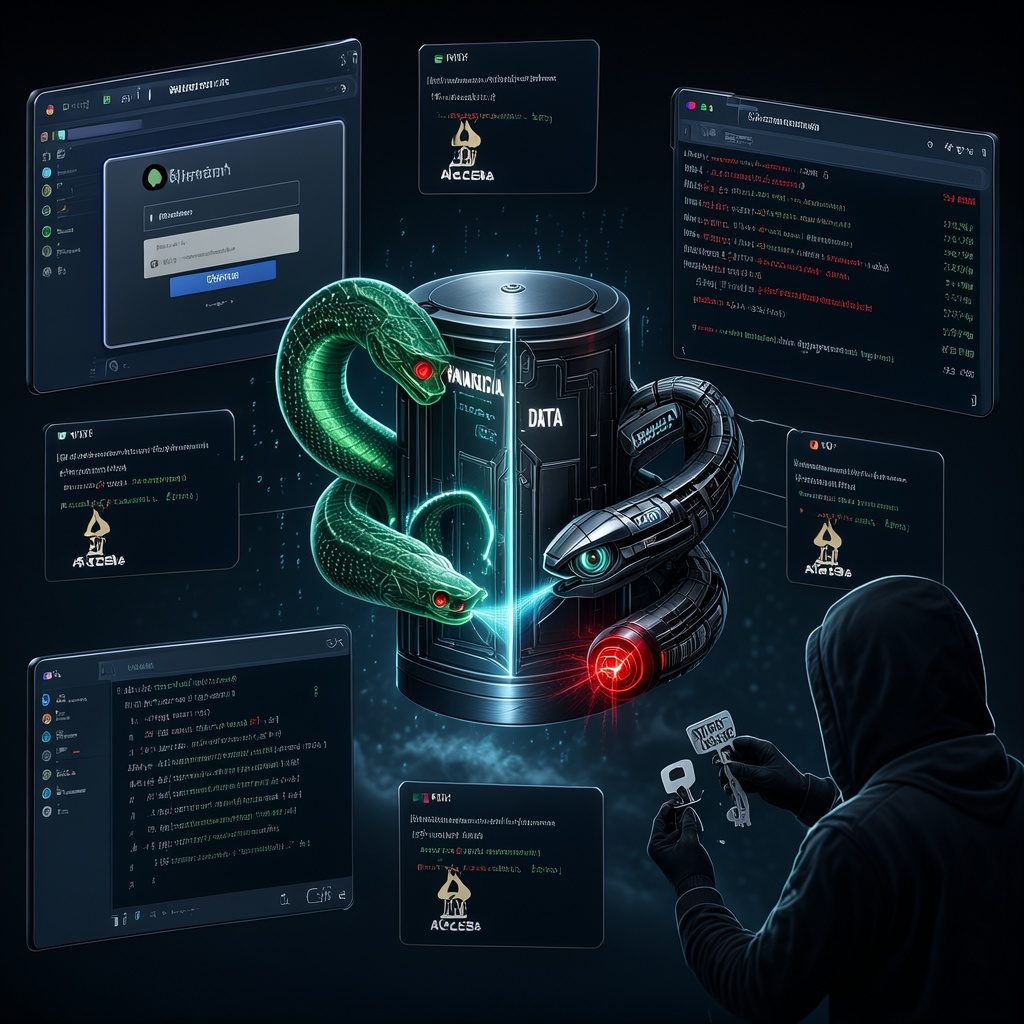
The cybercrime ecosystem is becoming increasingly industrialized, and a recent discovery underscores this evolution more clearly than ever. Since April 2026, a stealthy new backdoor dubbed "Mistic" has been deployed in financially motivated attacks, marking a significant escalation in the capabilities of initial access brokers (IABs). Security researchers from Symantec and Zscaler have linked this activity to KongTuke (also tracked as Woodgnat), a group that has refined the "access-as-a-service" business model .
What makes this campaign particularly alarming is the combination of advanced evasion techniques and a layered approach to compromise. In observed intrusions, Mistic is deployed alongside a Python-based RAT known as ModeloRAT, demonstrating a dual-implant strategy designed for resilience and long-term stealth .
The Technical Arsenal: Why Mistic is a Game-Changer
Mistic is not just another piece of malware; it is a purpose-built tool emphasizing low visibility and durability. Its most notable feature is its ability to execute payloads entirely in memory, leaving no files on the disk—a tactic that renders traditional signature-based antivirus solutions largely ineffective . Furthermore, it comes equipped with a built-in kill switch, allowing operators to erase the malware instantly if detection is suspected, complicating forensic analysis .
The infection chain is equally sophisticated. The group relies heavily on DLL sideloading, a technique that abuses a legitimate Microsoft executable (MpExtMs.exe) to load a malicious file named "EndpointDlp.dll". The naming convention is a deliberate deception, mimicking Microsoft endpoint security tools to blend into trusted processes . This is complemented by a .NET credential-stealing component that displays a fake login screen to harvest passwords .
Social Engineering at Scale
KongTuke’s success relies heavily on human deception, utilizing an evolving social engineering playbook. The group uses compromised WordPress sites to host ClickFix and CrashFix campaigns, tricking users into pasting malicious PowerShell commands . Since April, they have also expanded their attack surface to Microsoft Teams, impersonating IT helpdesk personnel to guide users into executing commands .
The Broader Threat: Access as a Commodity
Mistic is a prime example of how IABs are professionalizing the ransomware supply chain. The goal is not to deploy ransomware themselves but to sell high-value network access to affiliates, including groups like Qilin, Akira, and Black Basta . As experts note, defenders focusing solely on the final ransomware payload are missing the bigger picture. True defense requires visibility into the access infrastructure and the brokers who facilitate entry .
With a threat actor this agile and a backdoor this stealthy, organizations must shift from reactive detection to proactive threat hunting, focusing on memory analysis and behavioral anomalies. The battle is increasingly being won or lost in the access phase, long before the encryption begins.