AI in your SOC detects threats 55% faster
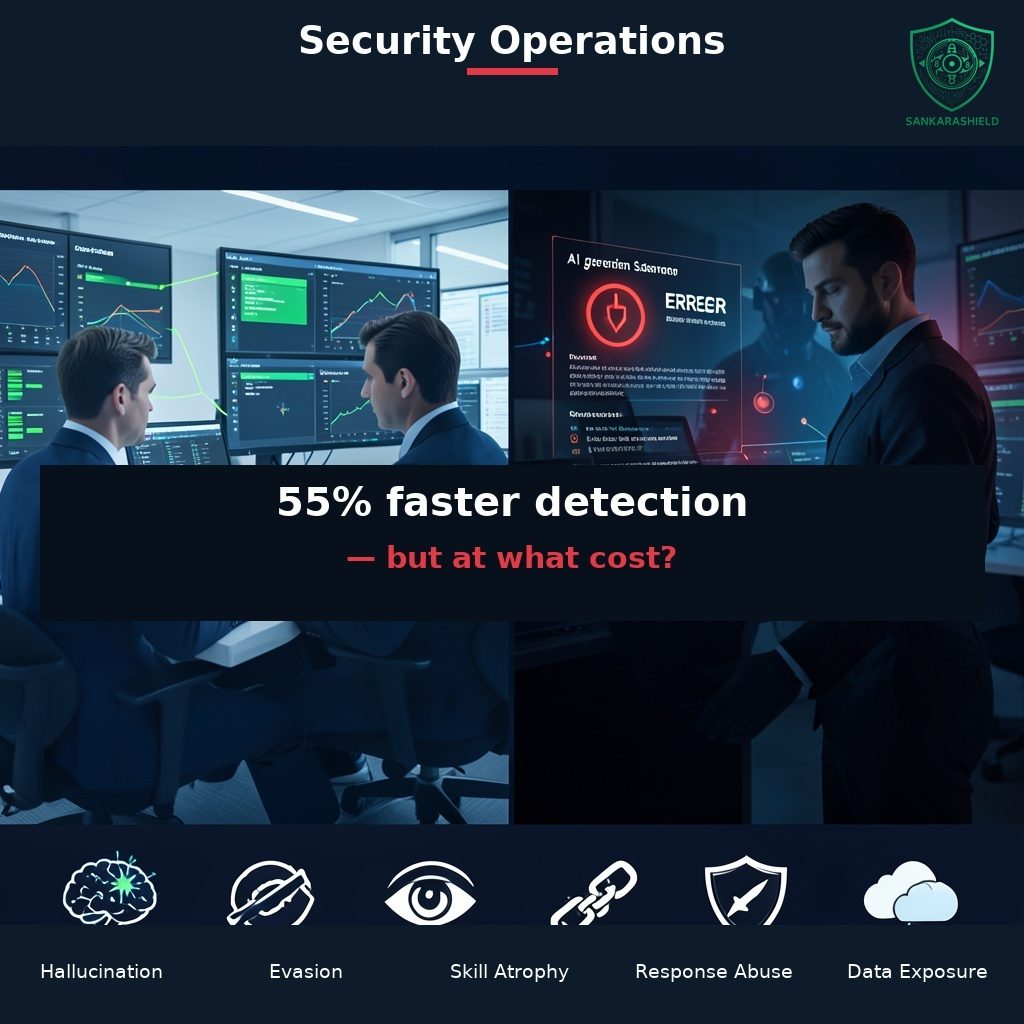
It also gives your analysts dangerous confidence in wrong answers. The case for AI-assisted defense is real. The risks of deploying it without discipline are underestimated.
What AI genuinely changes in security operations
- SPEED AT SCALE AI correlates signals across millions of events per second. Threats buried in noise surface in minutes. A human analyst working the same data would need hours — and still miss patterns.
- BEHAVIORAL DETECTION Machine learning establishes baselines and flags deviations. Insider threats, novel malware, and living-off-the-land attacks that bypass signatures become visible.
- AUTOMATED TRIAGE Up to 70% of Tier 1 alerts can be automatically classified, enriched, and prioritized. Analysts focus on what actually requires judgment.
What organizations are not talking about
- ADVERSARIAL EVASION Attackers study defensive AI and design around it. If your model was trained on 2024 patterns, sophisticated actors are already engineering for its blind spots.
- HALLUCINATION UNDER PRESSURE AI-generated incident summaries may contain confident errors. An analyst acting on hallucinated context makes the wrong decision — faster than ever before.
- SKILL ATROPHY Teams that delegate judgment to AI lose the capacity to exercise it without AI. When the system fails — and it will — the human backstop may no longer exist.
- AUTOMATED RESPONSE ABUSE Attackers who understand your detection triggers can craft activity that causes your own defenses to block legitimate users or generate noise at scale.
How to deploy AI in defense with discipline
AUGMENT, NEVER REPLACE JUDGMENT — Automate low-stakes responses. Require human approval for high-impact actions.
TEST ADVERSARIALLY — Red team your AI defenses. Understand what they miss before attackers do.
MAINTAIN HUMAN SKILL — Run exercises without AI tooling. AI-assisted does not mean AI-dependent.
VALIDATE OUTPUTS — Treat AI analysis as a first draft. Confidence is not accuracy.
MEASURE WHAT MATTERS — Time to detect, time to contain, false positive rate. Metrics tell you if your AI investment performs — or just generates the appearance of security.
The organizations winning on AI-assisted defense are not the ones who deployed the most tools.
They are the ones who integrated AI with discipline and preserved human judgment at critical decision points.
AI makes good security teams faster. It makes undisciplined teams overconfident.
Which one are you building?