The Best OS for Networking and Cybersecurity: A Field Guide
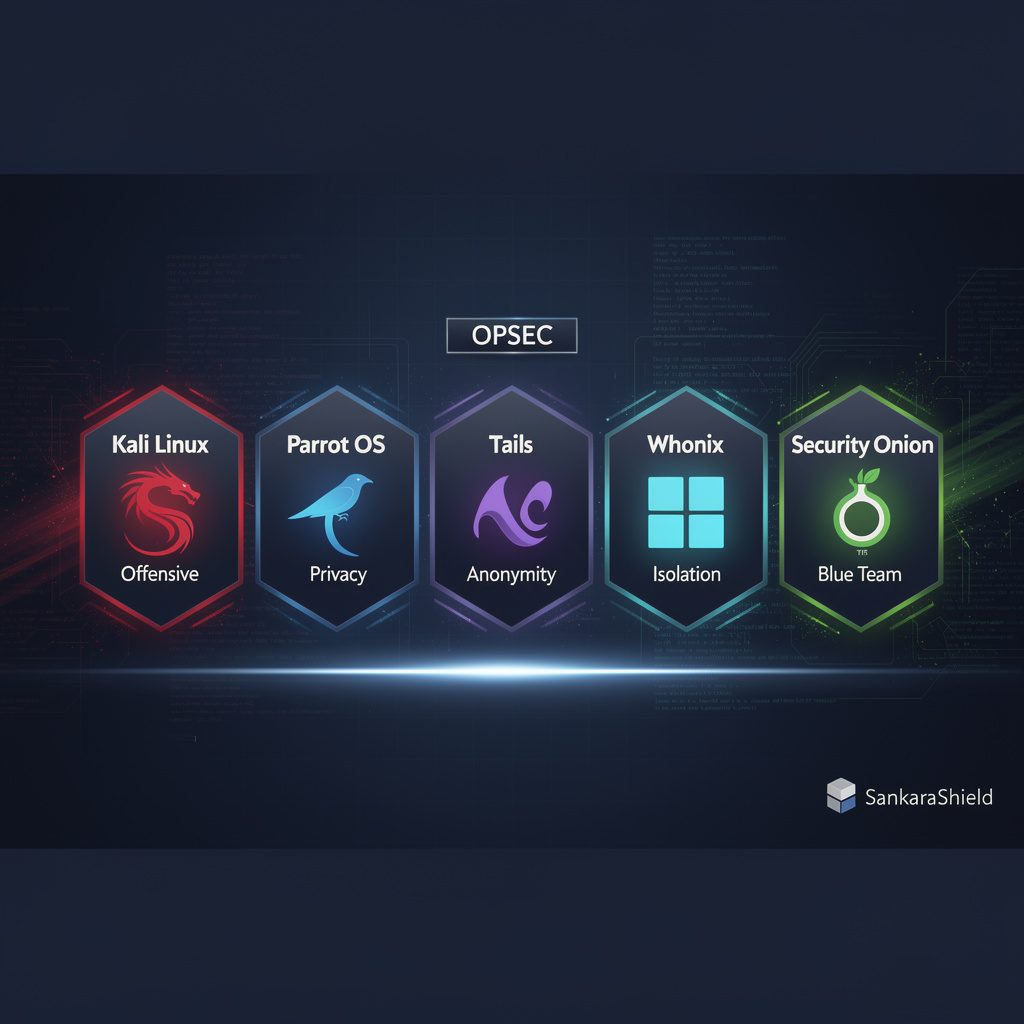
Every security engineer has an opinion. Most are wrong about the tradeoffs.
The right OS is not the most popular one. It is the one built for the threat model you are actually defending against. Choosing the familiar option is how teams inherit capability gaps they never planned for.
Here is what each major platform actually does — and when to use it.
- KALI LINUX The industry standard for offensive security. Pre-loaded with 600+ tools: Metasploit, Wireshark, Aircrack-ng, Burp Suite, Nmap, John the Ripper. Maintained by Offensive Security with a regular release cycle. Supports live boot, ARM deployment on Raspberry Pi, and undercover mode for work in public environments. Not designed for daily use or hardened production deployment.
Use when: red teaming, penetration testing, CTF competitions, vulnerability assessment.
- PARROT OS Lighter than Kali. Better suited for resource-constrained environments and older hardware. Ships with offensive tools alongside built-in anonymity capabilities — Tor, Anonsurf, and privacy-first configurations. More viable as a daily driver without sacrificing the core security toolchain.
Use when: mobile pentesting, privacy-focused operations, lightweight field deployments.
- TAILS Amnesic by design. Every session starts completely clean. No persistence unless explicitly configured. All traffic routed through Tor by default. Purpose-built for operational security where leaving no trace is a hard requirement. Not suitable for work requiring installed toolchains across multiple sessions.
Use when: sensitive communications, high-risk investigations, anonymous document handling.
- WHONIX Two-VM architecture. Gateway VM handles all Tor routing. Workstation VM has no direct internet access — it communicates only through the Gateway. IP leaks are structurally impossible, not just unlikely. Suitable for long-term work requiring strong anonymity without sacrificing tooling or persistence.
Use when: anonymous development, threat intelligence research, OPSEC-critical operations.
- SECURITY ONION Built for blue teams and network defenders. Full network security monitoring at scale. Integrates Suricata for signature detection, Zeek for protocol analysis, Elasticsearch and Kibana for log aggregation and visualization. Full packet capture with native threat hunting capabilities.
Use when: SOC deployment, SIEM integration, network forensics, threat hunting at scale.
The OS is a tool. The threat model is the requirement.
Offensive work needs Kali. Blue team operations need Security Onion. OPSEC-critical work needs Tails or Whonix. Teams that get this wrong rebuild environments during incidents.
Which one is in your toolkit — and for what purpose?