The most dangerous password isn't 123456.
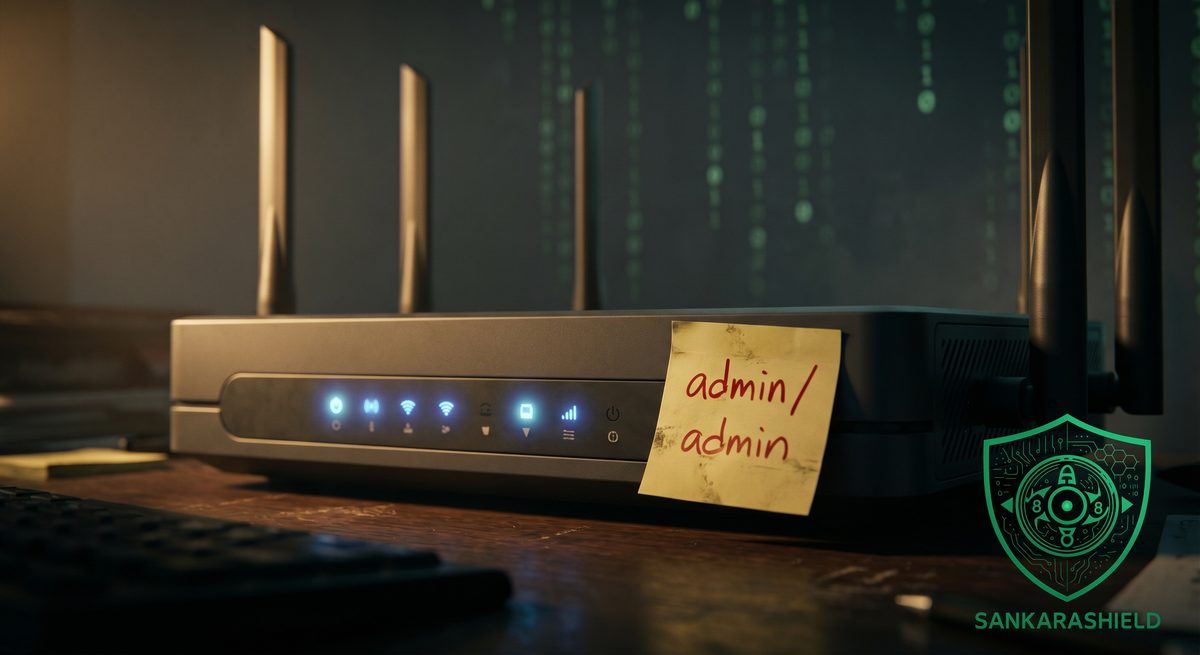
It's "admin". Or "password". Or just nothing at all.
And it's sitting right now on a router, a switch, a camera, or a firewall somewhere in your company's network — completely exposed, completely forgotten.
Default credentials are the silent killer of enterprise security. Not because they're hard to fix. But because nobody thinks it's their job to fix them.
The real cost nobody talks about
In 2021, a hacker breached a water treatment plant in Florida and tried to increase sodium hydroxide levels to dangerous concentrations. Entry point? A remote access tool with a shared password that hadn't been changed in years.
The Mirai botnet — responsible for one of the largest DDoS attacks in history, taking down Twitter, Netflix, and Reddit in 2016 — was built almost entirely by scanning for IoT devices with default credentials. Fewer than 70 passwords. Massive damage.
IBM's 2024 Cost of a Data Breach report puts the average breach cost at $4.88 million. A shocking percentage start with something a 12-year-old could guess.
Why does this keep happening?
Because default credentials are a deployment problem disguised as a security problem.
The team that installs the hardware isn't the security team. Nobody owns the moment between "plug it in" and "secure it properly." In large organizations, that gap can last months. Sometimes years.
IT moves fast. Audits move slow. Shadow IT makes it worse — a team spins up a NAS or an IP camera without going through proper channels. The device never gets hardened. Until someone finds it on Shodan.
What developers can do — by design
Force credential change on first login. Block access until they do. Make it non-negotiable.
Generate unique default credentials per device. Print them on the label. Invalidate them after first use.
Audit your dependencies. Third-party SDKs, embedded databases, admin panels — check what credentials they ship with.
Add credential checks to your CI/CD pipeline. Tools like Trivy or Grype can flag hardcoded credentials before they hit production.
Security by design means making the insecure path harder than the secure one. Remove that friction, and you remove the risk.
The bottom line
The next major breach in your industry probably won't come from a nation-state zero-day. It'll come from a device sitting on your network for two years with the factory password still on it. No exploit needed. Just patience and Shodan.
That's not a hacker problem. That's an engineering problem.
And engineers can fix it.
*What's your take — have you ever found default credentials on an active system during an audit? Drop it in the comments.*